We use cookies to provide you with a better experience. By continuing to browse the site you are agreeing to our use of cookies in accordance with our Cookie Policy.
Ground-source heat pump systems depend on durable, properly specified plastic piping, and the new PPI MS-7 model specification helps engineers ensure the right materials, standards and installation practices are used for reliable, long-term geothermal performance.
Proper pipe sizing is more complex than it seems — and oversizing can be just as problematic as undersizing; Lance MacNevin explains how the PPI’s Plastic Pipe Design Calculator helps designers strike the right balance for efficient, safe plumbing systems.
With its flexibility, durability and efficiency, PEX has become a dominant piping material, supported by evolving standards and extensive industry collaboration.
Launched alongside cultural icons like The Terminator and Purple Rain, ASTM F876 quietly marked the beginning of PEX tubing’s four-decade transformation from a European innovation to the dominant piping material across North America.
Research from the Plastics Pipe Institute notes that chlorine dioxide is much more aggressive on plumbing distribution systems, even at low levels. Specifiers and designers should use caution when considering its use as a chemical disinfectant to treat water for Legionella or other pathogens.
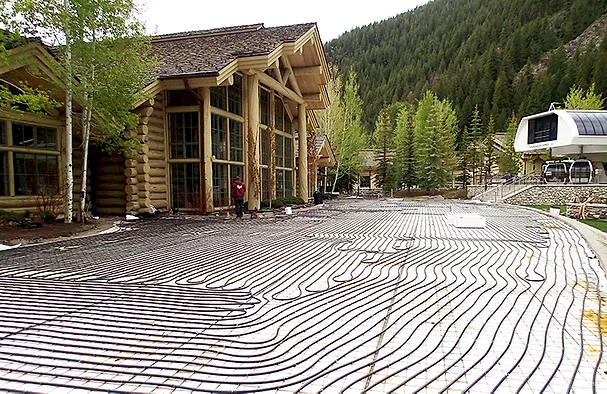
These hydronic systems keep outdoor residential and commercial surfaces such as sidewalks, driveways and stairs clear of snow and ice, a safety and liability issue. Lance MacNevin from the Plastics Pipe Institute explains how they also can reduce energy costs, thus lowering the operational costs of a building.
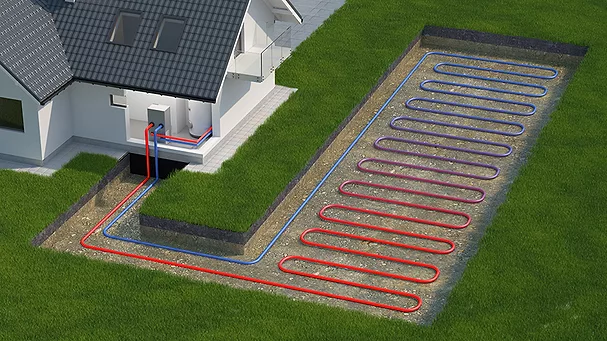
In Part 3 of this three-part series, learn about closed-loop, open-loop and direct-exchange geothermal systems. The geothermal provisions addressed in the Uniform Solar, Hydronics and Geothermal Code are the industry’s most advanced and updated provisions.
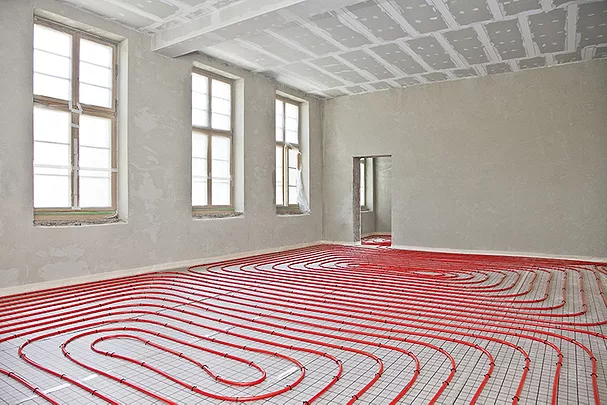
Many provisions of the 2021 Uniform Solar, Hydronics and Geothermal Code concerning radiant heating and cooling have not appeared in model codes before.
In Part 2 of a three-part series, learn how the Uniform Solar, Hydronics and Geothermal Code provides standards for radiant heating and cooling, including snow- and ice-melting systems.